
Epipremnum giganteum Variegata – Care
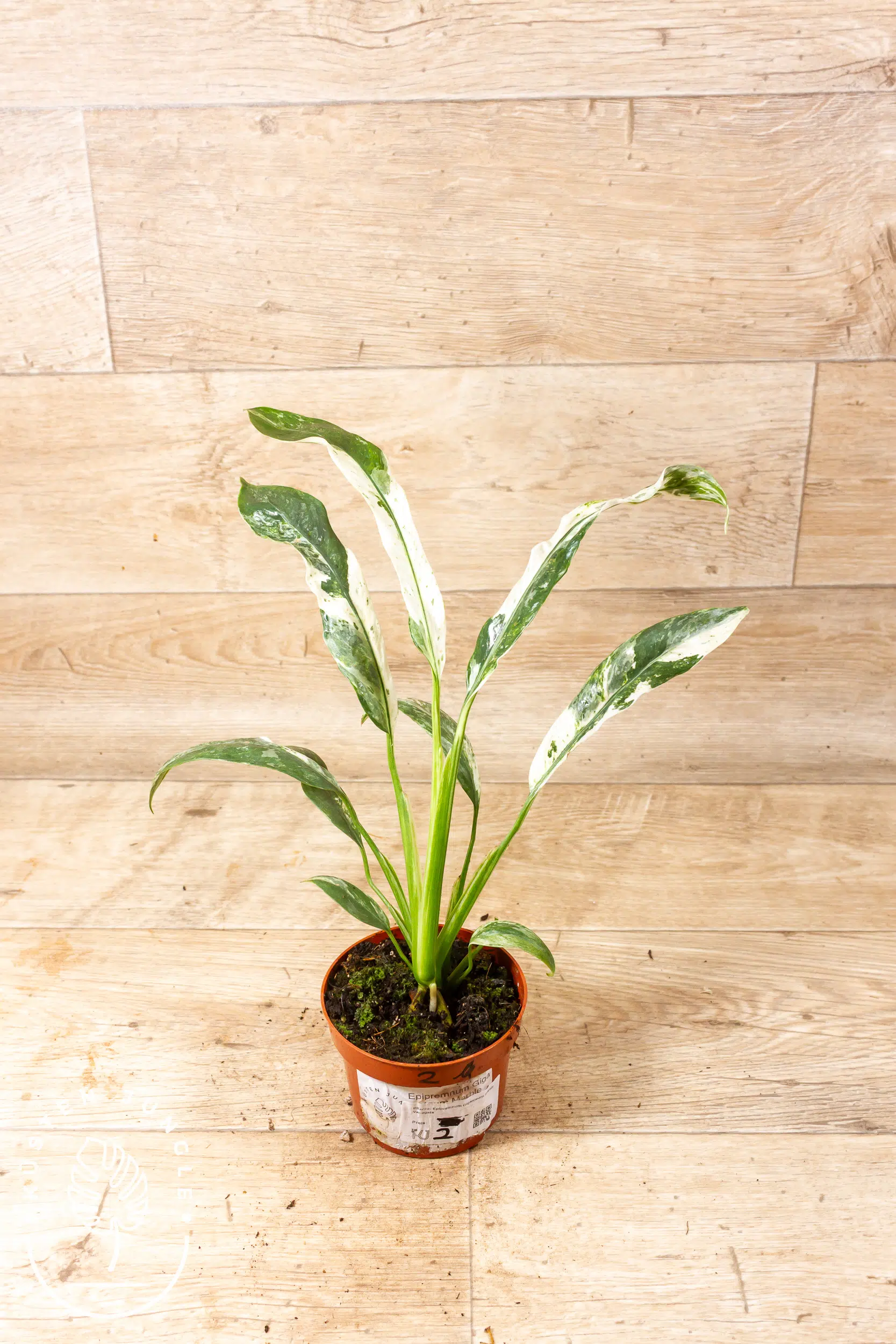
Location & Light
Bright, indirect light is particularly important for this variety so that the large leaves develop their creamy white marbling fully. Mild morning or evening sun is usually tolerated well, but direct sun during the rest of the day should be avoided as it can burn the leaves. A spot near a window with filtered light, perhaps through a thin curtain, is a good fit. If.
Pour
The top half of the substrate should dry out before the next watering, which usually takes about a week in an average home. This variety prefers to be slightly drier rather than too wet, it cannot tolerate waterlogging in the pot and should therefore be consistently avoided; always pour off excess water.
Fertilize
During its vigorous growth, this variety benefits from a well-diluted liquid fertilizer every 3 to 4 weeks from spring to summer. Fertilization should be stopped in autumn and winter. The general guidelines for the genus are a pH value of approximately 5.5 to 6.5 and an electrical conductivity of the irrigation water of roughly 1.0 to 2.0 mS/cm. If the plant is only kept by the window in autumn and winter, no further fertilization is needed due to the weaker light. However, with year-round bright plant lamp lighting, fertilization can continue at the usual rhythm.
We consciously alternate between different fertilizers for our own plants – currently including COMPO COMPLETE, Foliage Focus, Liquid Gold Leaf, and Hesi TNT-Complex, supplemented with Hesi Root Complex, Hesi PowerZyme, and CalMag as needed.
Substrate
An airy substrate, whether it's a classic aroid mix or more mineral-based with plenty of perlite and bark, suits this undemanding variety. A pot with good drainage is important, and due to its vigorous growth, you should regularly check if a larger pot is needed.
Humidity & Temperature
Warm, humid air best suits the tropical origin of this plant, but it also tolerates normal room air. Instead of regular misting – the effect hardly lasts and moist leaves can encourage fungal infections – a humidifier provides more consistent results. The ideal temperature range is between approximately 16 and 29 °C; strong, abrupt temperature fluctuations should be avoided, as they can lead to stress and leaf drop.
Growth & Support
As the name suggests, this variety belongs to the larger representatives of the genus. In the wild, the leaves grow over 60 cm long. As a houseplant, they remain more modest, but on a moss pole, they still grow significantly more lushly than when allowed to trail freely. Without a climbing opportunity, the leaves remain noticeably smaller, and the full, impressive size of the mature form is rarely achieved. With window-only exposure in autumn and winter, growth slows down noticeably due to weaker light. In contrast, with year-round bright plant lamp lighting, growth remains largely consistent.
Good to know
Epipremnum giganteum originates from Myanmar, Cambodia, Vietnam, Thailand, the Malay Peninsula, and Singapore, and has been botanically renamed multiple times – earlier classifications ranged from Monstera gigantea to Rhaphidophora gigantea to Scindapsus giganteus, before it landed in the genus Epipremnum. Unlike many related species, it flowers relatively regularly in cultivation with rich golden-yellow inflorescences.
Like all aroids, this Epipremnum contains calcium oxalate crystals and is irritating to pets and children if ingested – best to place it out of reach.