
Musa ‚Aurea‘ - Care
Location & Light
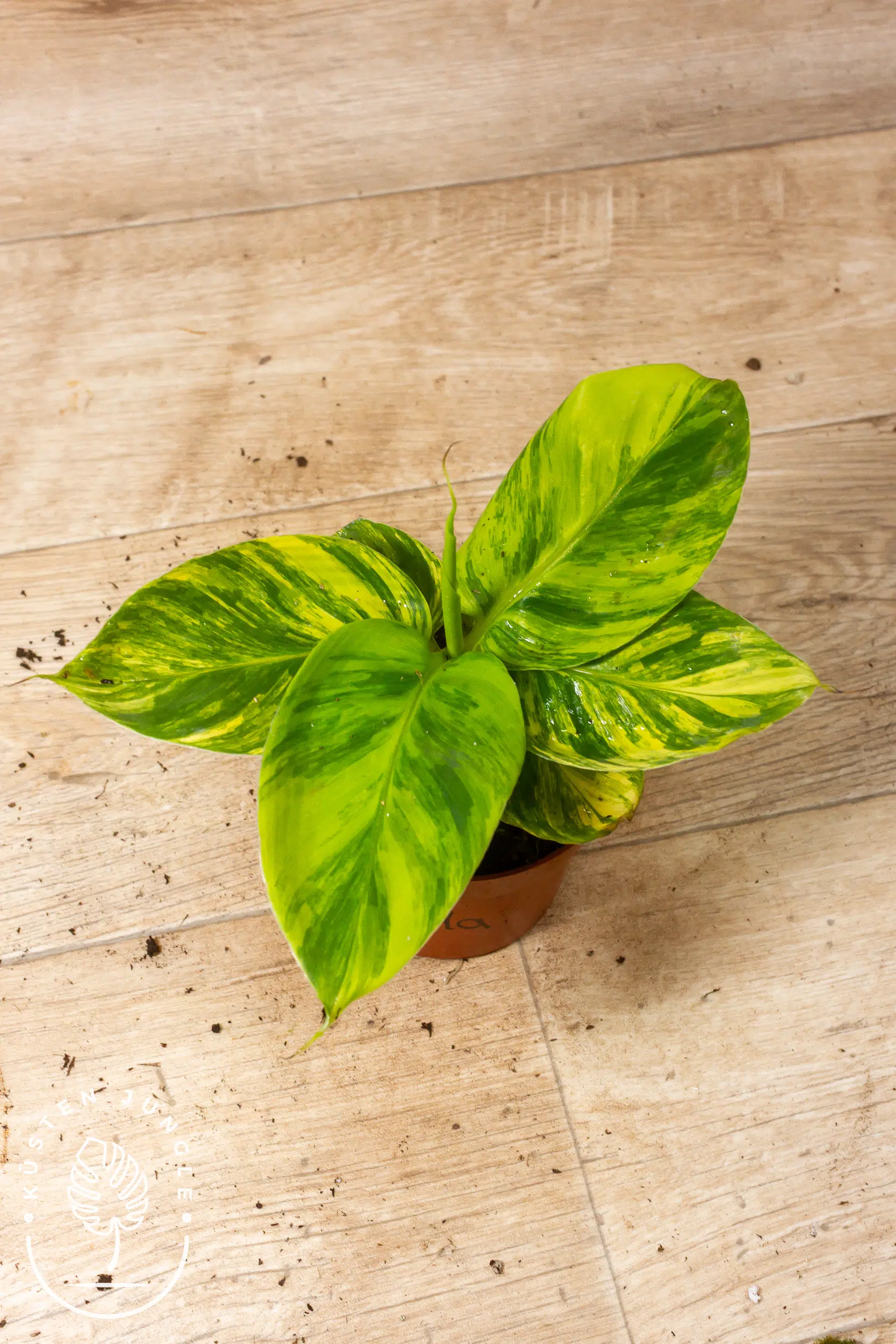
Unlike many shade-loving houseplants, this Musa really needs a lot of light to develop its strong green-yellow coloring – the brightest spot possible is a must. A few hours of mild morning or evening sun are usually well tolerated and even enhance the color intensity. Direct midday sun behind glass, however, can burn the leaves, so it's better to keep some distance from the window. If it's too dark, the pattern will fade and the already rapid growth will become noticeably tougher.
Pour
With its large leaves, this banana plant evaporates a lot of water, especially during the warmer months, and therefore needs to be watered thoroughly and regularly, preferably weekly – the substrate should remain evenly moist. In winter, when growth is dormant, the soil can dry out a bit more between waterings. Despite its high water needs, it does not tolerate waterlogging and reacts to it with rot at the root collar, so excess water should always be drained off.
Fertilize
Bananas are considered heavy feeders and grow accordingly fast. During the growth phase, they should be fertilized with a well-diluted liquid fertilizer approximately every 2 to 4 weeks. Those who wish to slow down growth should use a more conservative dosage. Guidelines for the genus suggest a pH value of about 5.5 to 7.0 and an electrical conductivity of the irrigation water roughly between 1.2 to 1.8 mS/cm. If the plant is only placed by the window in autumn and winter, it should be fertilized less frequently or not at all due to the weaker light. However, if kept under bright plant lamp illumination year-round, fertilization can continue at the usual rhythm.
We consciously alternate between different fertilizers for our own plants – currently including COMPO COMPLETE, Foliage Focus, Liquid Gold Leaf, and Hesi TNT-Complex, supplemented with Hesi Root Complex, Hesi PowerZyme, and CalMag as needed.
Substrate
A highly organic, permeable soil based on coconut or compost, loosened with some perlite, provides the roots with good nourishment while still allowing excess water to drain away. A pot with sufficient drainage holes is important; due to the fast growth, it should also be repotted into a slightly larger pot once a year.
Humidity & Temperature
Ideal humidity levels range between 50 and 70 %; regularly misting the large leaves is especially beneficial, particularly in heated rooms. It generally tolerates normal indoor air well, but the edges of the leaves may turn brown if exposed to persistently dry, heated air. The ideal temperature range is between 20 and 30 °C; in winter, the temperature should not drop below 15 °C.
Growth & Form
Musa ‚Aurea‘ grows surprisingly vigorously and compactly at the same time – a true pseudo-stem formed from tightly rolled leaf sheaths instead of a woody trunk, from which new, large leaves repeatedly emerge. Over time, the plant forms small offshoots at its base, known as pups, which can be carefully separated and cultivated individually once they have rooted sufficiently. Older, lower leaves turn brown and die off over time – this is a normal growth process and not a sign of improper care. Withered leaves can simply be cut off. When kept solely in a window during autumn and winter, the otherwise rapid growth significantly slows down due to weaker light. However, under year-round bright grow light illumination, it continues to grow relatively evenly even during the darker seasons.
Good to know
‚Aurea‘ is a cultivated variety, presumably a selection within the species Musa acuminata or a closely related cultivar group, specifically cultivated for its bright leaf coloration and its compact but vigorous growth. The genus Musa originates from the warm, humid regions of Southeast Asia, particularly India, Malaysia, and the tropical areas of China and Indonesia.
Unlike many other houseplants, Musa is considered safe for pets and children as it contains no known toxic ingredients.